
Every AI suggestion waits for a clinician.
AI suggests a priority and cites its protocol. Red-flag rules set a floor under it, and a nurse or doctor makes the call.
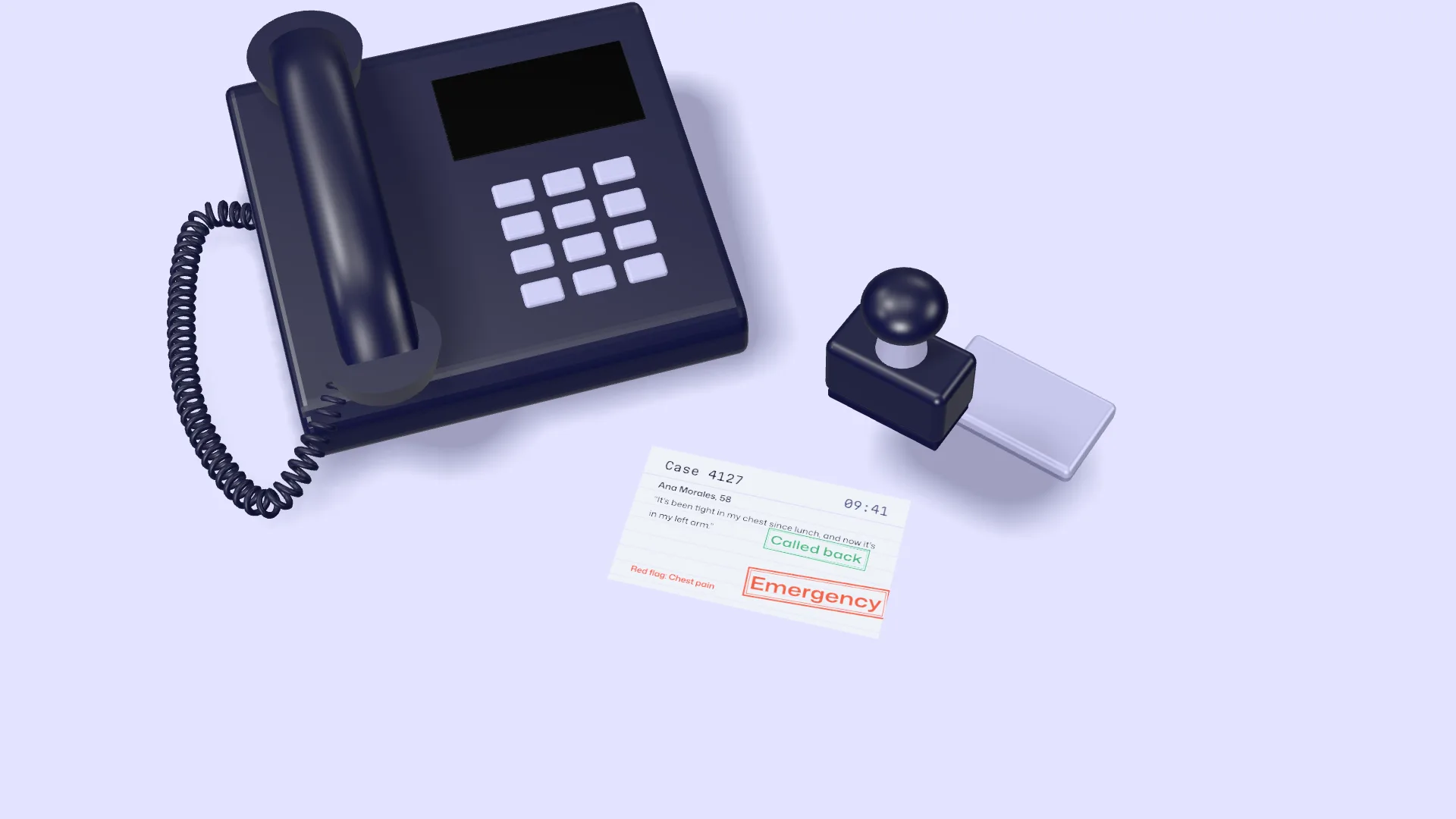
18 red flags sit under every suggestion.
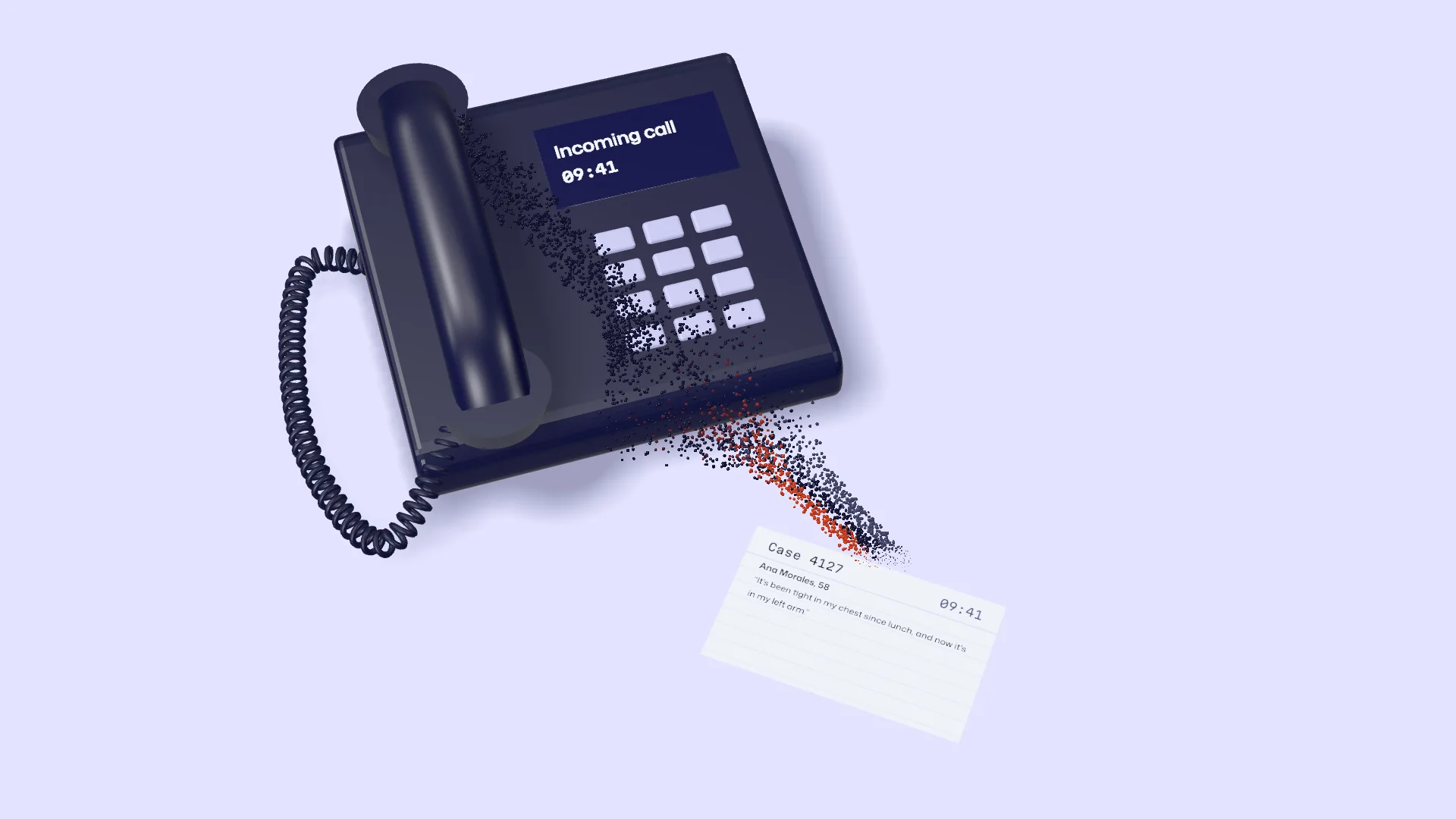
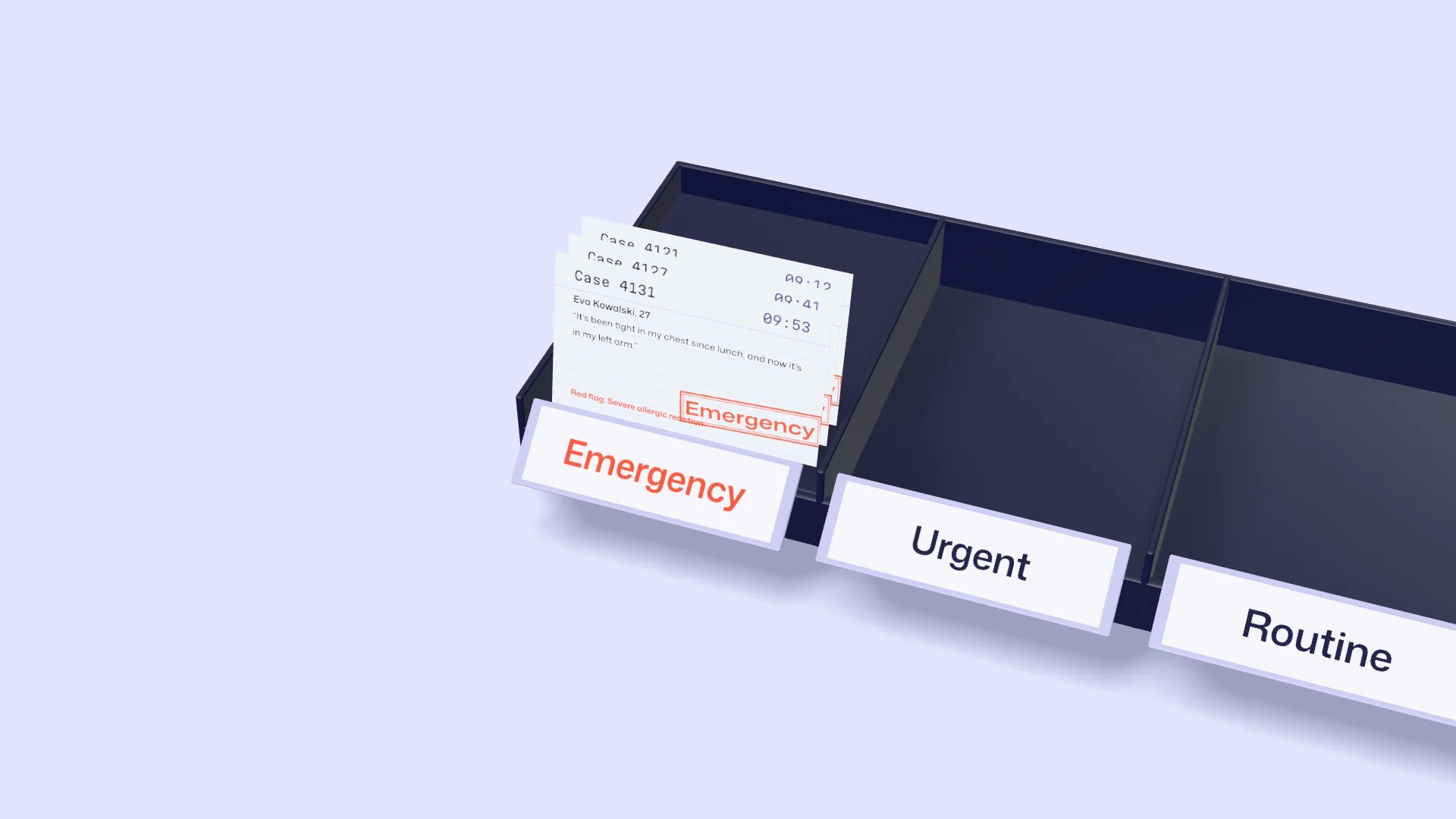
If a caller's words name one and don't deny it, the case is an emergency before the AI runs. The AI can raise a priority from there. It never lowers one.

The rules are written from public guidance: the NHS, MedlinePlus, the CDC and the American Heart and Stroke Associations. Callers misspell, run words together and speak for someone else, so the rules read "siezure" as seizure and "her chest hurts" as chest pain.
- Chest pain
- Trouble breathing
- Stroke signs
- Sudden severe headache
- Meningitis signs
- Loss of consciousness
- Seizure
- Severe bleeding
- Severe allergic reaction
- Sepsis signs
- Pulmonary embolism signs
- Serious head injury
- Bleeding or pain in pregnancy
- Fever in a baby under 3 months
- Sudden testicle pain
- Diabetic ketoacidosis signs
- Overdose or poisoning
- Suicidal thoughts
The nurse knows something the call didn't say.
Changing the AI's priority takes one reason from a short list. It goes on the timeline, in the audit log and in next month's safety report.
AI triage · 11:06 am
"She slipped in the kitchen this morning and hit her head on the counter. She says she feels fine."
Suggested
Routine · Home care
Protocol cited
Head injury, adult
Adopted by Dr. Amara Okafor, Oct 14, 2026
Jordan Reyes, RN, changed it to
Urgent · ER now
Reason
- History or risk factors, chosen
- New information
- Severity
- Protocol doesn't fit
- Access to care
- Patient's preference
- Clinical judgment
Note
Takes warfarin after a valve replacement. A head injury on a blood thinner needs to be seen today.
11:06 am
AI triaged this as Routine
11:09 am
Jordan Reyes set the priority to Urgent. History or risk factors.
End of month
Counted in the safety report under raised, by reason
Six guardrails, in the order a call meets them.
Red-flag rules
Chest pain, stroke signs and the other red flags make a call an emergency before the AI runs, whatever it suggests after.
The protocol floor
The AI answers the matched protocol's questions from the caller's words. A yes raises the priority. It never lowers one.
Cited protocols
Every suggestion names the protocols it used. Each shows its publisher, its sources and its version.
A clinician's decision
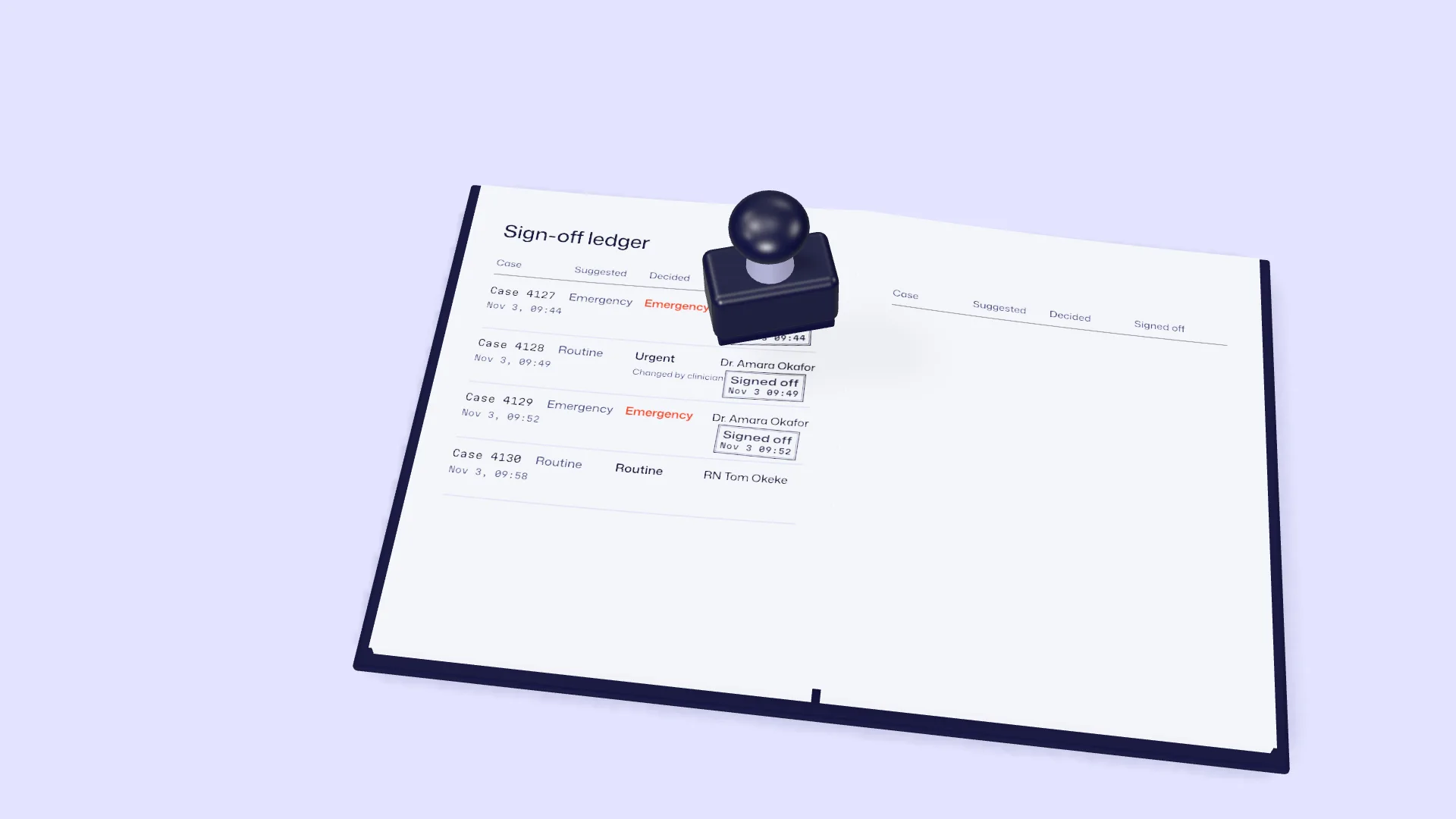
A nurse or doctor confirms or changes each priority and disposition. A change takes a reason and goes in the audit log.
A clinician sends it
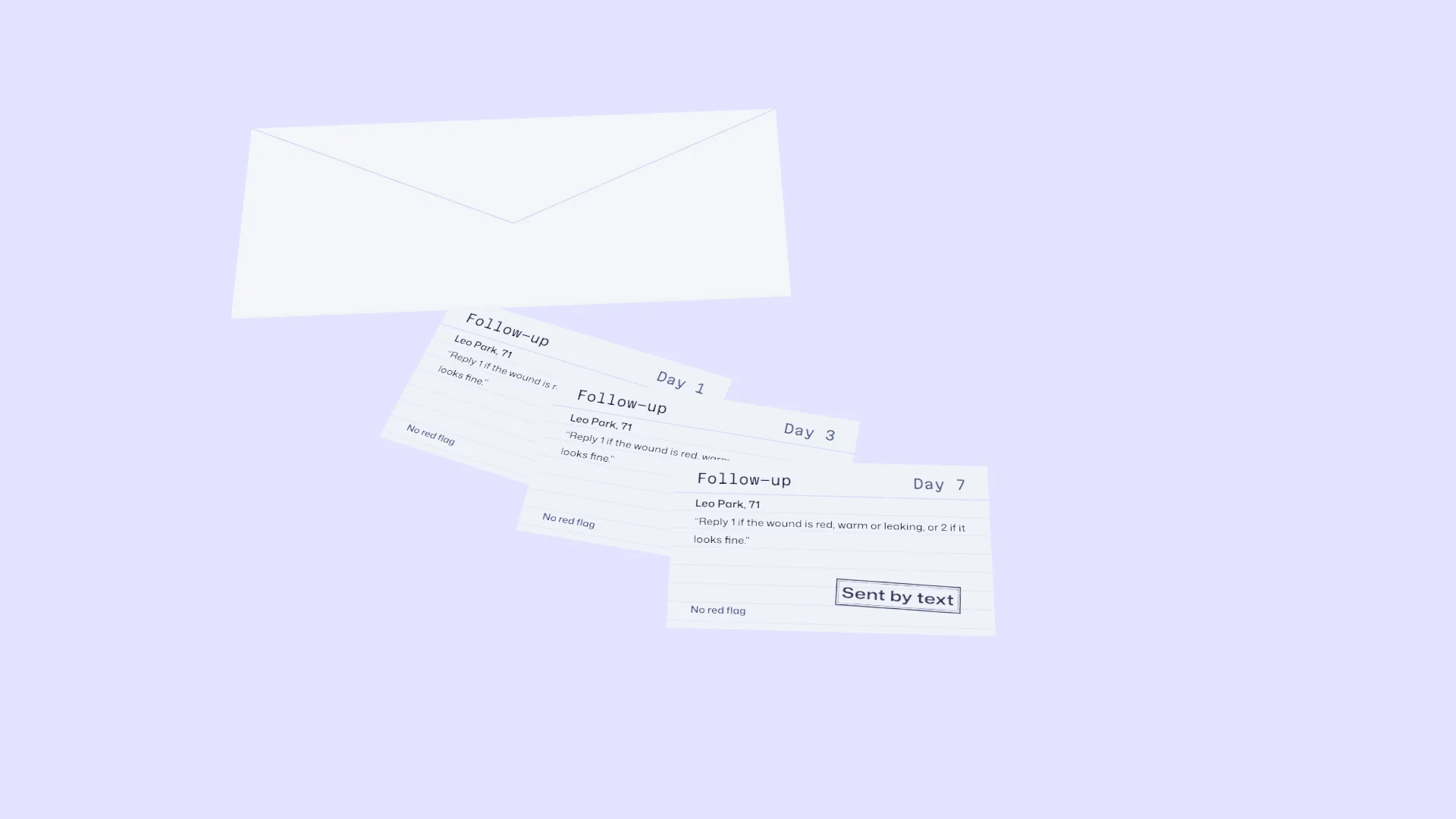
The AI drafts. Nothing reaches a patient until a nurse or doctor sends it, and a case handed to a doctor waits for their sign-off.
The safety report
Each month: overrides by reason, possible under-triage with links to the cases, and time to first review.
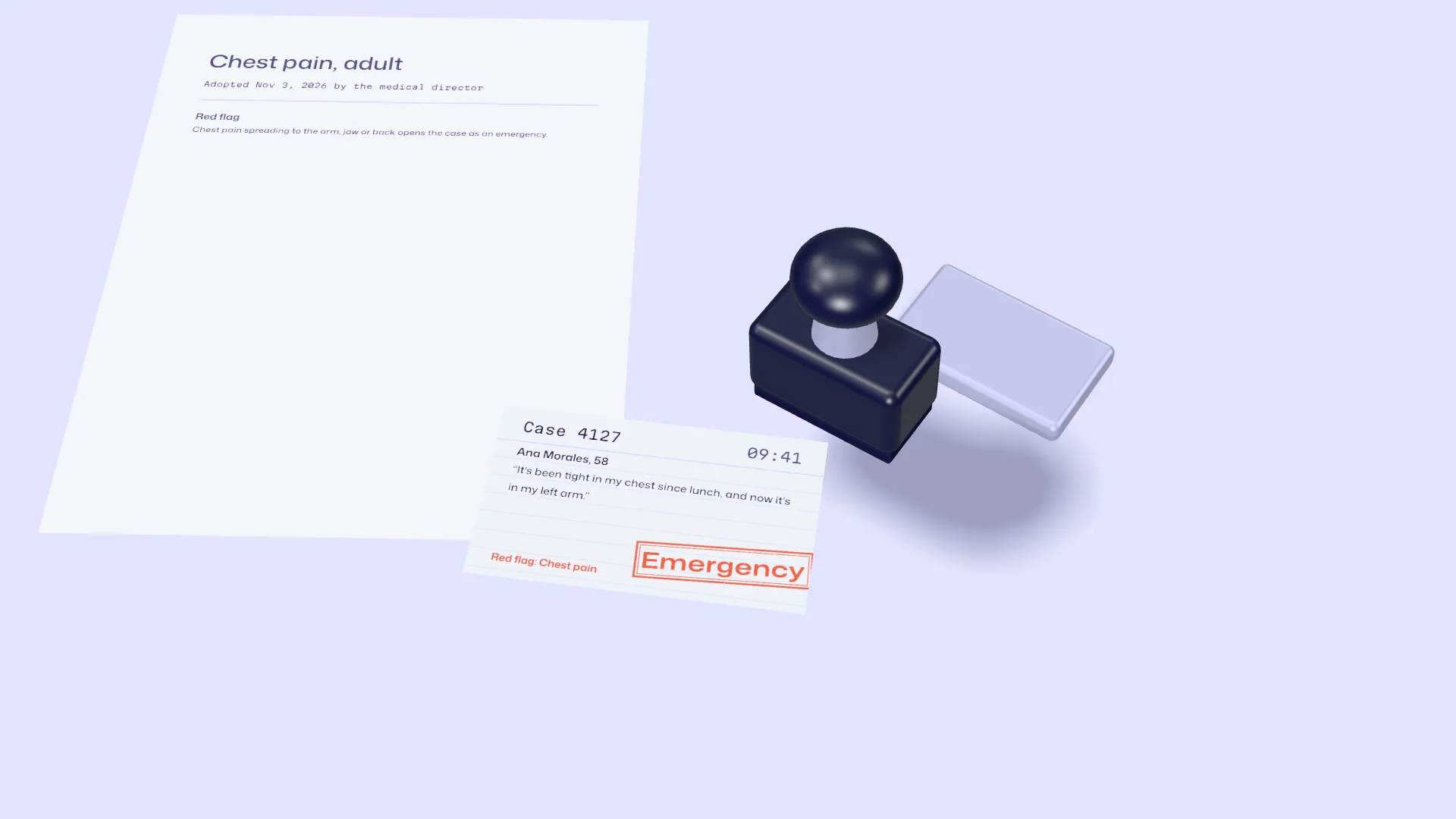
Your medical director adopts the protocols, and the record keeps the date.
The starter library is written from public guidance, never a licensed set. Nothing cites a protocol until your medical director adopts it with a typed signature.
| Date | Protocol | Version | What happened |
|---|---|---|---|
| Oct 14, 2026 | Protocol set, 250 protocols | v1 | AdoptedDr. Amara Okafor, medical director |
| Oct 30, 2026 | Chest pain, adult | v2 | Changed. Waiting to be adopted again |
| Nov 2, 2026 | Chest pain, adult | v2 | AdoptedDr. Amara Okafor, medical director |
Triage cites Chest pain, adultAdopted by Dr. Amara Okafor, Nov 2, 2026
What the AI never does.
It never lowers a priority.
Red-flag rules and protocol answers can only raise one. A clinician changes it, with a reason.
It never sends a patient anything.
A nurse or doctor sends every answer, and the text or email says only that the care team has something for them.
It keeps no draft on its own.
A draft is kept only once a clinician accepts or edits it.
It never trains on your patients.
Triage runs on Amazon Bedrock, which doesn't train models on what is sent or share it with Anthropic, the model's maker.1
Show your medical director the floor.
We walk through the red-flag rules, the protocol library and the safety report together.